Architectural Blueprint & SaaS PoC
501(c)(3) Subsidiary Initiative
Where's My Family: Zero-Trust Architecture & SaaS Pipeline Blueprint
A rigorous engineering retrospective on designing, integrating, and validating a rapid-deployment SaaS ecosystem and Zero-Trust data vault for a modern foster care family reunification agency.
CL
Christopher Lazok
Founder, Systems Architect & Logistics Analyst · Georgetown, TX
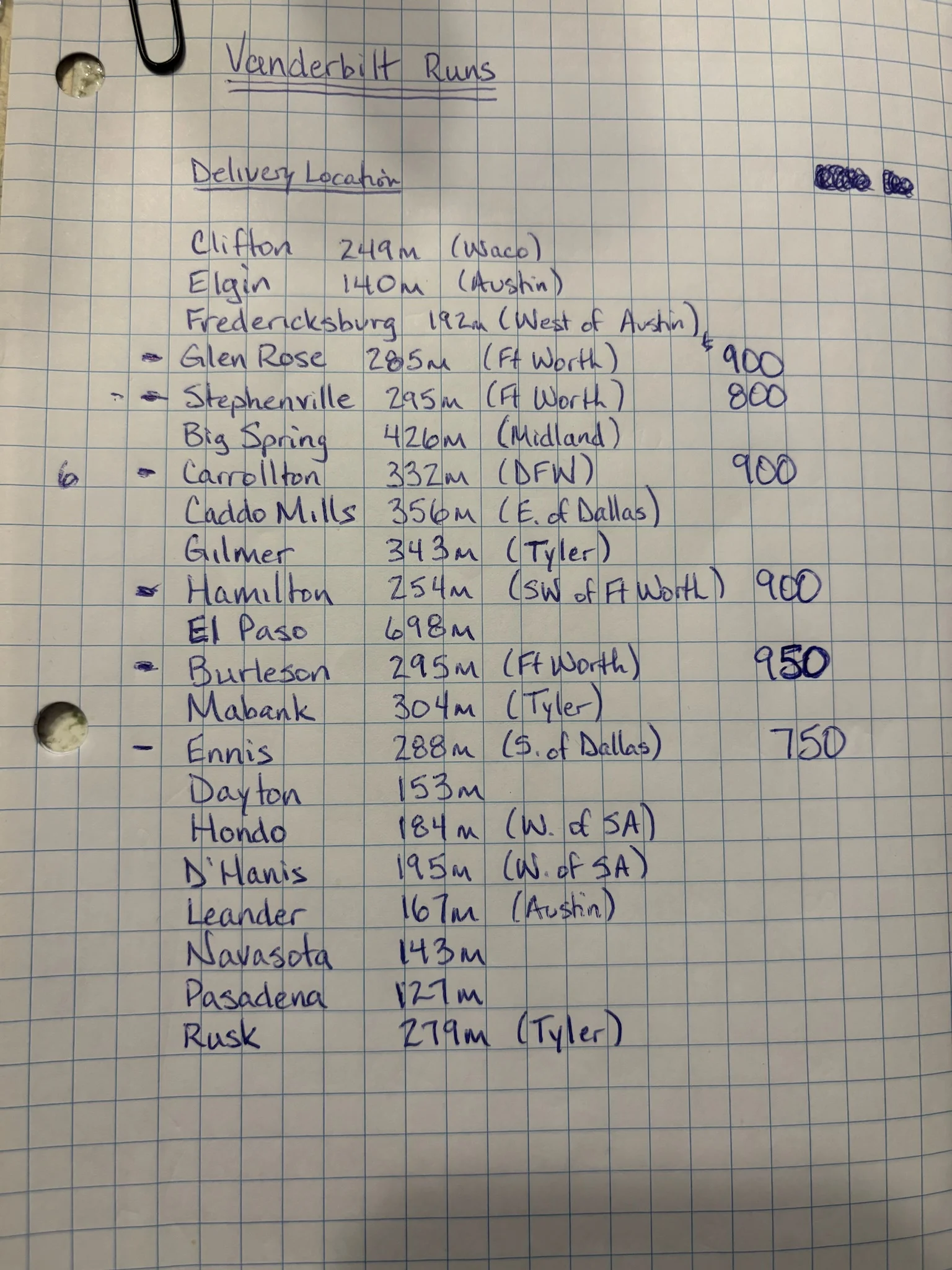
Figure 1.0: Field systems architecture notebook documenting the decoupling of public intake endpoints, webhook pipelines, and air-gapped Zero-Trust vaults for Where's My Family.
1. The Mission: Digital Framework for Family Reconnection
Family separation within the foster care system represents one of the most acute, structural vulnerabilities in modern child welfare. Nationwide, the empirical reality is stark:
- 400,000+ Children in Foster Care: According to data published by the U.S. Department of Health & Human Services (HHS) and the Child Welfare Information Gateway, over four hundred thousand youth reside in out-of-home foster care placements on any given day—roughly half the total population of the state of Delaware.
- 70% Sibling Separation Rate: Child welfare research indicates that up to 70% of siblings entering the foster care system are separated into distinct foster homes or residential institutions, severing their primary developmental attachment figures.
- 50% Reunification Horizon: While approximately 50% of children exiting foster care achieve reunification with primary biological caregivers, the median length of stay spans 13 months—critical developmental windows characterized by emotional distress and fragmented kin networks.
- Clinical Attachment Impact: Peer-reviewed longitudinal studies demonstrate that children who maintain regular, structured contact with biological siblings and parents exhibit significantly reduced behavioral decompensation, greater placement stability, and improved lifetime educational outcomes.
Operational Charter
Where's My Family was chartered under Helping Hands 501(c)(3) to build high-integrity family bridges: restoring connection, facilitating DNA relationship confirmation, coordinating legal advocacy, and hosting structured reunification workshops.
Architectural Mandate
Nonprofit digital systems often struggle with brittle tooling and data silos. My mandate was to architect a production-ready, highly maintainable Proof of Concept (PoC) capable of rapid launch within 8 weeks, strict regulatory compliance, and near-zero ongoing operational overhead.
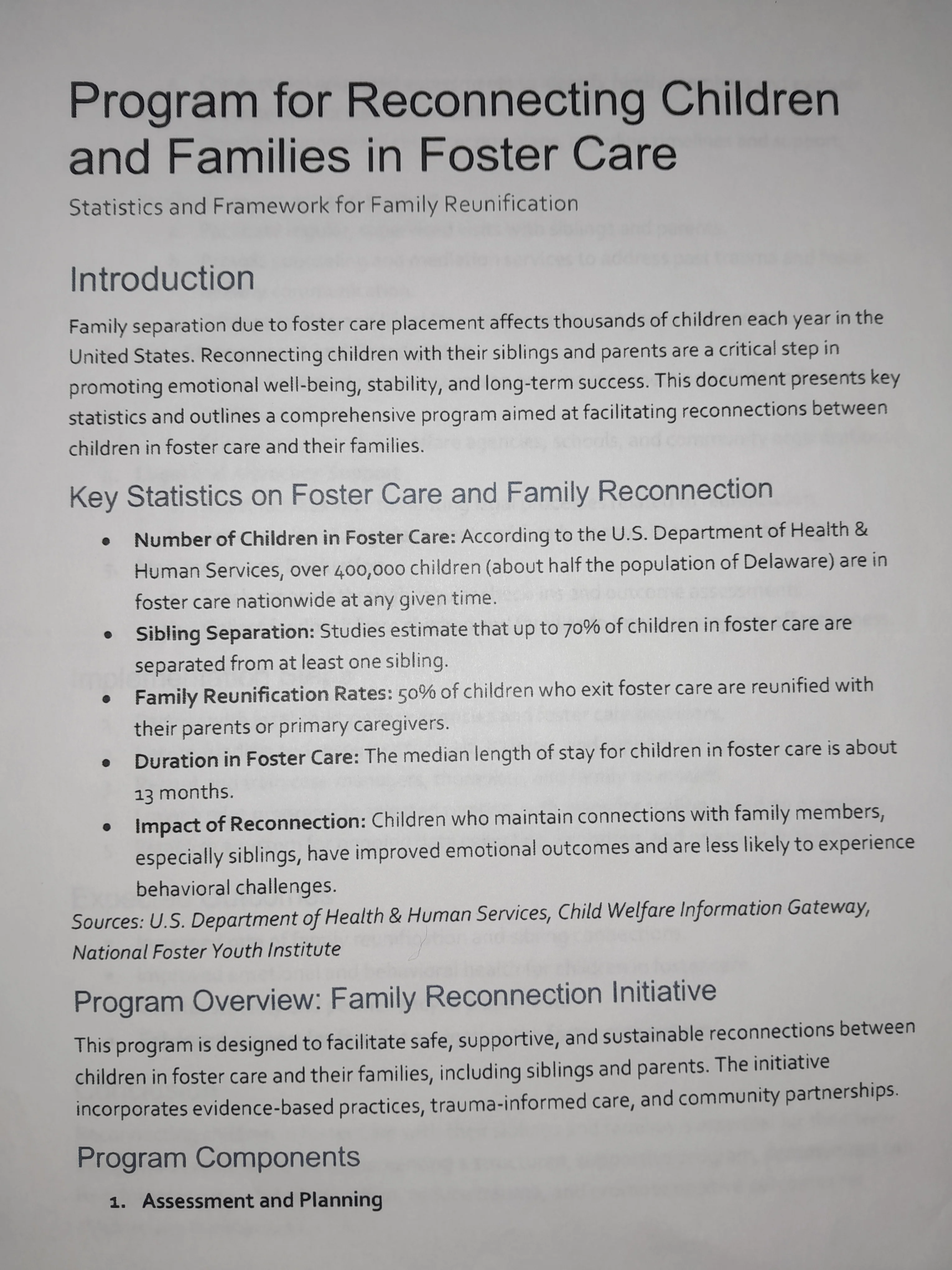
Figure 1.1: Baseline operational requirements and child welfare statistical framework recorded during initial intake planning.
2. The SaaS Architecture Stack: Layered Decomposition
To achieve immediate deployment velocity without accumulating crushing technical debt or ongoing server maintenance, I engineered a decoupled multi-layer SaaS topology.
Rather than deploying a monolithic, custom-coded web application that would demand ongoing patching, dedicated container clusters, and on-call DevOps rotations, I assembled best-of-breed enterprise SaaS primitives configured for strict security and low maintenance.
┌─────────────────────────────────────────────────────────────────────────┐
│                           PUBLIC ACCESSIBILITY LAYER                    │
│             Squarespace Business CMS (wheresmyfamily.org)               │
│             Responsive Landing · Mission CDN · Custom Injection         │
└────────────────────┬───────────────────────────────┬────────────────────┘
                     │                               │
        ┌────────────▼──────────────┐   ┌────────────▼──────────────┐
        │       PAYMENT LAYER       │   │    EVENT MANAGEMENT LAYER │
        │ Donorbox Native Script    │   │ Eventbrite Embedded Block │
        │ (Stripe 501(c)(3) Token)  │   │ Ticket / Vendor / Sponsor │
        └────────────┬──────────────┘   └────────────┬──────────────┘
                     │                               │
                     └───────────────┬───────────────┘
                                     │
                        ┌────────────▼────────────┐
                        │   INTEGRATION PIPELINE  │
                        │  Zapier Webhook Router  │
                        └────────────┬────────────┘
                                     │
       ┌─────────────────────────────┴─────────────────────────────┐
       │                                                           │
┌──────▼──────────────────────────┐             ┌──────────────────▼──────────────────┐
│      OPERATIONS LAYER           │             │      ZERO-TRUST SECURITY VAULT      │
│ Google Workspace for Nonprofits │             │    "Agent Out" CJIS/HIPAA Vault     │
│ Master CRM (Google Sheets)      │             │ Enclave Encryption · Ephemeral RBAC │
│ Google Drive Asset Central Hub  │             │ Air-Gapped Case File Storage        │
└─────────────────────────────────┘             └─────────────────────────────────────┘
2.1 Public Web & CMS Layer — Squarespace Business
The choice of public CMS was determined through a rigorous trade-off evaluation between Squarespace, WordPress, and Wix:
| Evaluation Factor | Squarespace | Self-Hosted WordPress | Wix | Selection Rationale |
| :--- | :--- | :--- | :--- | :--- |
| Setup Velocity | Fast | Moderate | Fast | Rapid 8-week launch window to broadcast media readiness. |
| Embed & Widget Support | Strong (Code Injection) | Plugin Ecosystem | Limited / iFrame Only | Seamless JS injection without iframe sandbox styling conflicts. |
| Donorbox Native Embed | Native Script Block | Shortcode / Plugin | Workaround Needed | Retains donor on-page; zero drop-off from external redirects. |
| Eventbrite Integration | Native Code Block | Third-party plugin | iFrame Only | Dynamic ticket selector directly within /events. |
| Maintenance Burden | Ultra-Low | High (CVE patches, DBs) | Low | No database updates, PHP runtime vulnerabilities, or plugin rot. |
| Code Injection Control | Yes (Business Tier) | Full | Restricted | Required for headers, UTM analytics, and Donorbox SDK. |
| 501(c)(3) Discount | 25% to 50% Off | Free OS (High hosting) | None | Unlocks annual SaaS cost reductions. |
I selected Squarespace Business on the registered domain wheresmyfamily.org. The .org top-level domain establishes immediate trust for institutional donors, child welfare caseworkers, and corporate sponsors.
The Business tier was mandatory over Basic because it unlocks Custom Code Injection and script blocks—the foundational capability required to host Donorbox and Eventbrite SDKs cleanly on /donate and /events.
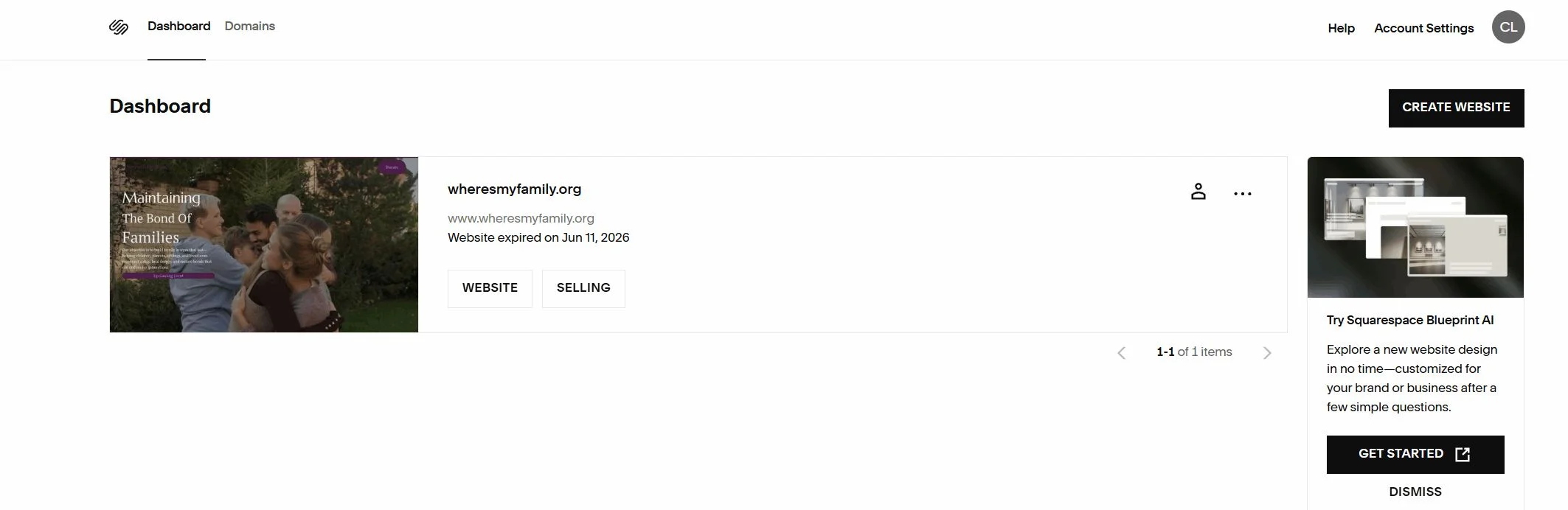
Figure 2.1: Verified apex domain registration for wheresmyfamily.org under the Squarespace administrative console.
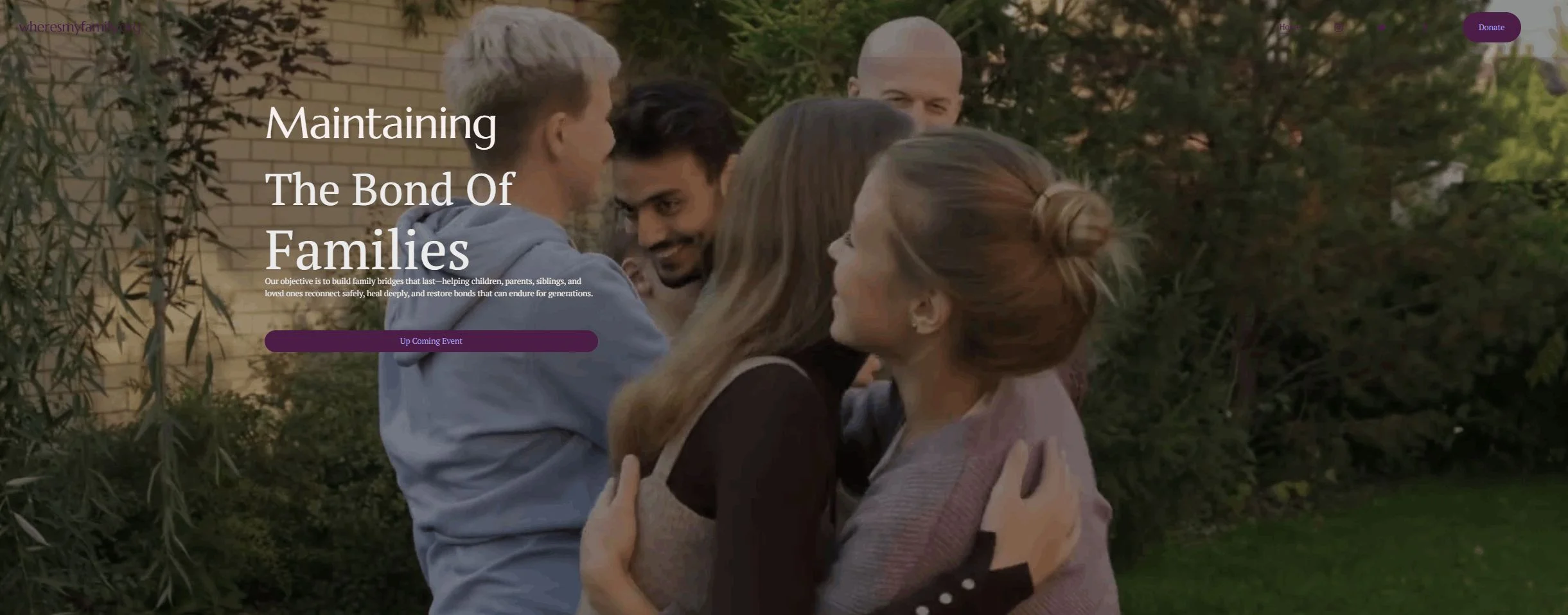
Figure 2.2: Production hero layout delivering mobile-first responsiveness for TV, radio, and billboard outreach.
2.2 Payment Processing & Fiscal Architecture — Donorbox + Stripe
A common anti-pattern in early-stage nonprofits is attempting to wire raw Stripe Checkout links directly to static buttons. While direct Stripe processing incurs slightly lower platform overhead, it creates massive technical debt for non-technical leadership:
- No Out-of-the-Box 501(c)(3) Receipts: Raw Stripe charges trigger standard commercial transaction confirmations, not IRS-compliant tax deduction receipts containing tax-exempt EIN statements and deduction verifications.
- Brittle Subscription Management: Handling failed recurring donor credit cards, updates, and dunning cycles requires custom backend logic.
- Missing Donor CRM Fields: Direct Stripe charges capture email and tokenized card info, but lack pledge intention, anonymous donor flags, or honoree memorial fields.
To eliminate custom backend code, I deployed Donorbox layered over Stripe.
- PCI Scope Elimination: Donorbox utilizes Stripe Elements within an on-page modal/iframe. Credit card PANs never touch Squarespace or our infrastructure, preserving SAQ-A PCI compliance.
- Automated IRS Receipts: Every successful charge automatically fires an IRS-compliant 501(c)(3) tax receipt referencing Helping Hands' EIN.
- 501(c)(3) Transaction Rate: Stripe's charity verification reduces transaction fees from the standard 2.9% + 30¢ down to 2.2% + 30¢, saving $7.00 per $1,000 processed. Blended with Donorbox's nonprofit rate, the total fee is maintained at ~3.7%.
2.3 Event Management & Multi-Tier Sponsorship — Eventbrite
Community outreach drives require tiered ticket registration, volunteer check-ins, and sponsor onboarding. I integrated Eventbrite directly into Squarespace via custom embed blocks on /events.
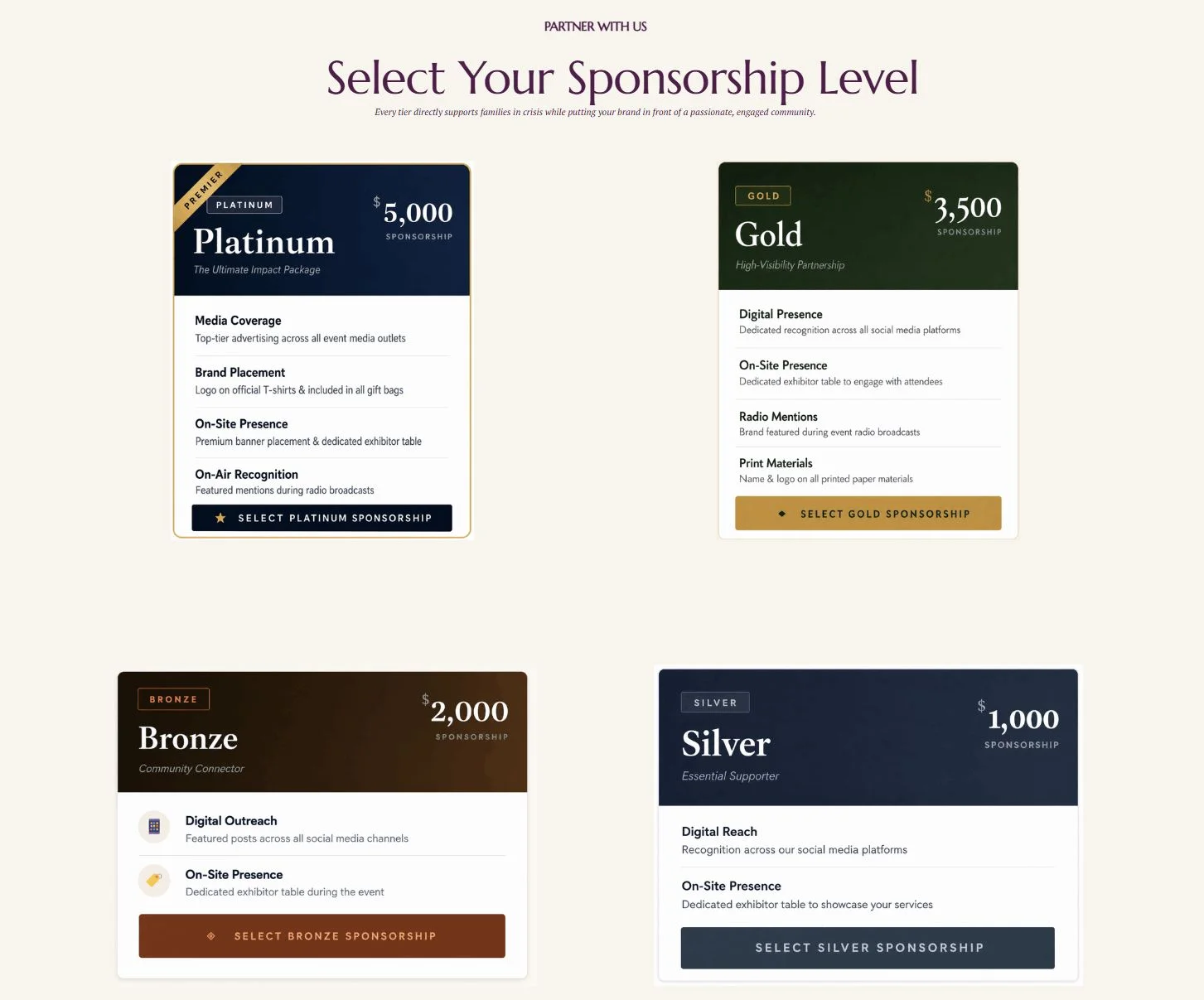
Figure 2.3: Structured sponsorship tiers (Platinum $5k, Gold $3.5k, Bronze $2k, Silver $1k) and vendor space ticketing ($250) engineered for Eventbrite and web presentation.
- Free Community Events: Incur $0 Eventbrite platform fees, enabling unrestricted admission for foster youth and care providers.
- Tiered Corporate Sponsorships: Standardizes institutional giving ($5,000 Platinum, $3,500 Gold, $2,000 Bronze, $1,000 Silver) with on-site table reservations and media placement.
- Vendor Space Ticketing: Fixed $250 non-refundable vendor space registrations for local community partners.
3. Data Synchronization & Friction Point Engineering
The fatal flaw of multi-SaaS architectures is the creation of data silos. When donor data lives exclusively in Donorbox, event attendees in Eventbrite, and contact/intake inquiries in Squarespace forms, leadership is left blind without unified operational records.
To prevent fragmentation, I designed an automated event-driven ETL pipeline powered by Zapier piping into a normalized Google Sheets Master CRM.
┌─────────────────┐       ┌─────────────────┐       ┌─────────────────┐
│ Donorbox API    │       │ Eventbrite API  │       │ Squarespace Form│
│ Successful Gift │       │ Ticket Purchase │       │ Contact/Pledge  │
└────────┬────────┘       └────────┬────────┘       └────────┬────────┘
         │ Webhook                 │ Webhook                 │ Webhook
         ▼                         ▼                         ▼
┌─────────────────────────────────────────────────────────────────────┐
│                    ZAPIER UNIFIED EVENT ROUTER                      │
│      Payload Normalization · Contact Deduplication · Field Mapping  │
└──────────────────────────────────┬──────────────────────────────────┘
                                   │
                                   ▼
┌─────────────────────────────────────────────────────────────────────┐
│                 GOOGLE SHEETS MASTER CRM DATABASE                   │
│ [Timestamp | Full Name | Email | Tier | Donation/Event | Lifetime]  │
└──────────────────────────────────┬──────────────────────────────────┘
                                   │
                                   ▼
┌─────────────────────────────────────────────────────────────────────┐
│       ADMIN NOTIFICATIONS & AUDIT DISPATCH (Google Workspace)       │
│  Instant Gmail Alert → info@wheresmyfamily.org / Executive Director │
└─────────────────────────────────────────────────────────────────────┘
3.1 Systematic Friction Point Mitigation
During architectural design, I identified four critical points of friction and implemented preventative technical controls:
Friction Point 1: Donor & Attendee Fragmentation
- The Vulnerability: Three distinct platforms generating contact records independently. Without synchronization, follow-up fundraising appeals miss event attendees, and major donors are treated like cold leads.
- Engineered Resolution: Zapier webhooks capture inbound JSON payloads across all three services, normalize names and emails, check for existing records in Google Sheets, and update cumulative lifetime engagement metrics in real time.
- Cost: Free/Starter tier handles early operational volumes with zero server compute bills.
Friction Point 2: The Direct Stripe Tax Receipt Trap
- The Vulnerability: If a volunteer or administrator sends an unmanaged Stripe Payment Link or direct checkout button, Stripe processes the charge without dispatching an IRS tax receipt.
- Engineered Resolution: Strict operational constraint enforced across all marketing copy: All donation CTAs route exclusively through Donorbox. Stripe links are disabled from public display.
Friction Point 3: Event Synchronization Latency
- The Vulnerability: Manually updating static HTML when events sell out or schedules change leads to frustrated community members and broken registration links.
- Engineered Resolution: Embedded dynamic Eventbrite script blocks that auto-update live ticket counts directly inside the Squarespace layout, backed by Zapier calendar synchronization.
Friction Point 4: Media Attribution Across Broadcast Campaigns
- The Vulnerability: Public launches across TV, regional radio, flyers, and social platforms make it impossible to determine which promotional channel generated specific pledges.
- Engineered Resolution: Parameterized UTM URL structure provisioned across all channels (e.g.,
wheresmyfamily.org/donate?utm_source=radio_klbj,wheresmyfamily.org/donate?utm_source=tiktok). Donorbox natively ingests UTM parameters and appends them to CRM webhook payloads.
4. Zero-Trust & Regulatory Compliance: The "Agent Out" Data Vault
While public engagement, donations, and event tickets flow freely through consumer-grade SaaS tools, family reunification data cannot touch public pipelines.
Foster care casework involves highly sensitive, protected information:
- Minors' legal identities, birthdates, and government IDs
- Sealed juvenile court orders and custody determinations
- Child Protective Services (CPS) / child welfare agency case files
- Therapeutic psychiatric evaluations and trauma assessments
- Biological sibling DNA testing and relationship verification data
To handle these requirements without compromising safety, I authored the architectural specifications for the "Agent Out" Platform—an air-gapped, Zero-Trust Data Vault engineered for full CJIS (Criminal Justice Information Services) and HIPAA compliance.
┌────────────────────────────────────────────────────────────────────────┐
│                        PUBLIC SAAS PERIMETER                           │
│     Squarespace CMS · Donorbox · Eventbrite (No Case Data Permitted)   │
└────────────────────────────────────────────────────────────────────────┘
                                    │
                         STRICT BOUNDARY ISOLATION
                                    │
┌───────────────────────────────────▼────────────────────────────────────┐
│                    "AGENT OUT" COMPLIANT DATA VAULT                    │
│                                                                        │
│   ┌────────────────────────────────────────────────────────────────┐   │
│   │ 1. ZERO-TRUST IDENTITY & ENCLAVE ACCESS                        │   │
│   │    • Hardware MFA (FIDO2 / WebAuthn) Enforcement               │   │
│   │    • Ephemeral JWTs with 15-Minute Re-Authentication           │   │
│   │    • Mutual TLS (mTLS) Client Certificate Verification         │   │
│   └────────────────────────────────────────────────────────────────┘   │
│                                   │                                    │
│   ┌───────────────────────────────▼────────────────────────────────┐   │
│   │ 2. ROLE-BASED ACCESS CONTROL (RBAC) MATRIX                     │   │
│   │    • Caseworker Role: Scoped read/write to assigned case IDs   │   │
│   │    • Legal Advocate Role: Court motions & sealed filings only  │   │
│   │    • DNA Specialist Role: Anonymized specimen ID telemetry    │   │
│   │    • System Auditor Role: Cryptographic log verification only  │   │
│   └────────────────────────────────────────────────────────────────┘   │
│                                   │                                    │
│   ┌───────────────────────────────▼────────────────────────────────┐   │
│   │ 3. ENVELOPE ENCRYPTION & AUDIT LOGGING                         │   │
│   │    • Data at Rest: AES-256-GCM Envelope Encryption (KMS)       │   │
│   │    • Data in Transit: TLS 1.3 Strict Cipher Suites             │   │
│   │    • Tamper-Evident Append-Only Cryptographic Audit Log        │   │
│   └────────────────────────────────────────────────────────────────┘   │
└────────────────────────────────────────────────────────────────────────┘
4.1 Zero-Trust Architecture Principles
- Never Trust, Always Verify: No user, device, or network location is granted ambient trust. Every single API request to the intake vault requires cryptographic identity verification and contextual authorization checks.
- Least Privilege Principle: Caseworkers can view only the specific family units assigned to their roster. Case notes cannot be exported en masse. Administrative accounts are strictly separated from data access roles.
- Envelope Encryption & Field-Level Tokenization: Sensitive child identifiers and contact information are encrypted at the database field level using unique data keys (DEKs) wrapped in a master key (KEK) governed by a hardware security module (HSM).
- Append-Only Tamper-Evident Auditing: Every read, write, update, or export action generates an immutable audit record containing caseworker hash, client IP, timestamp, and accessed case ID. Audit logs are replicated off-site to prevent alteration.
5. Cloud Infrastructure & 501(c)(3) Economics
Maximizing dollar efficiency is essential for nonprofit stewardship. By leveraging official 501(c)(3) verification pathways, I unlocked substantial recurring software enterprise credits.
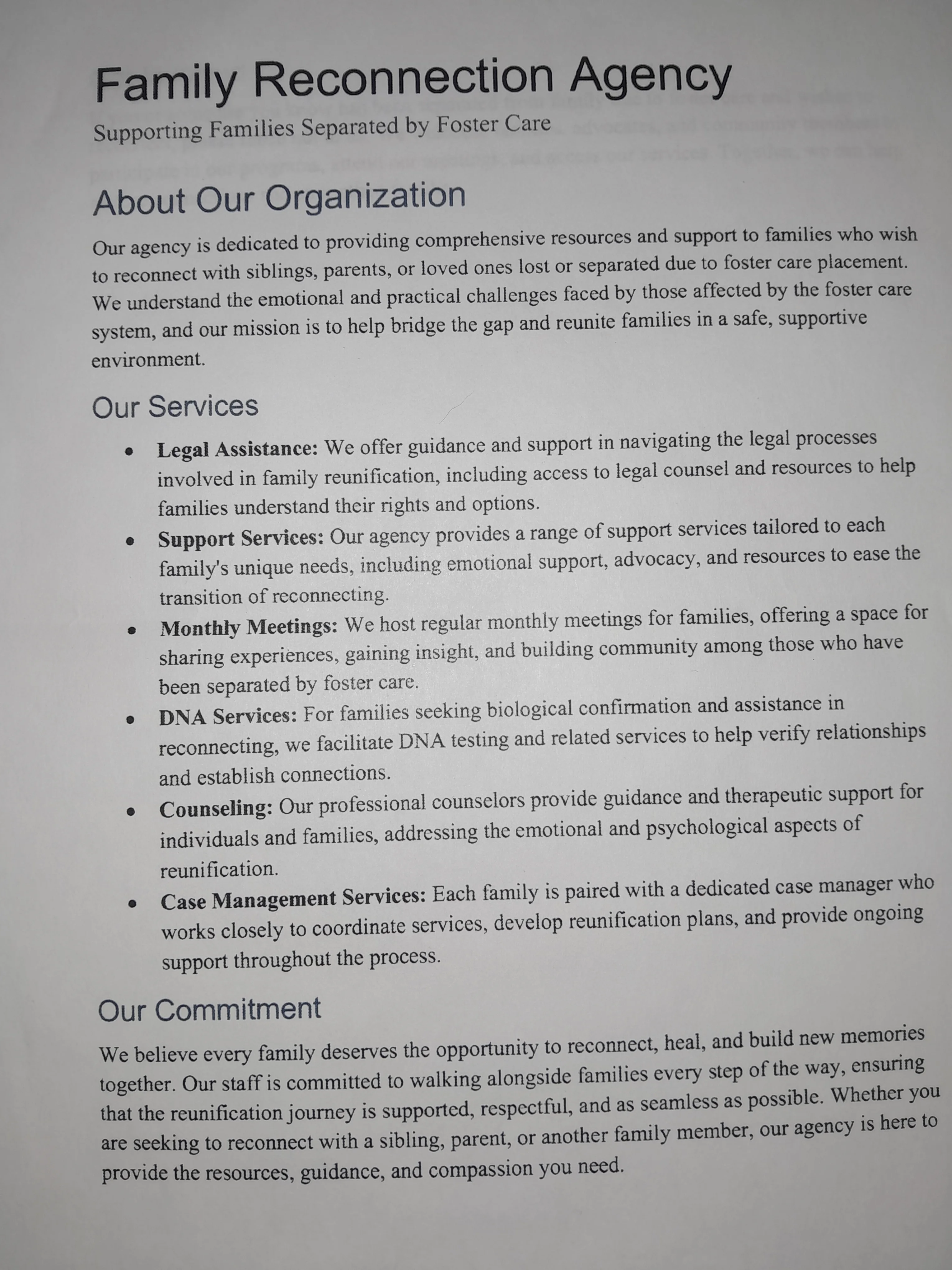
Figure 5.1: Operational services breakdown detailing case management, legal assistance, monthly meetings, and DNA testing protocols.
5.1 The 501(c)(3) Qualification Pathway
- TechSoup Validation Gateway: Register the organization under Helping Hands' EIN at
TechSoup.org. TechSoup serves as the authoritative verification clearinghouse for major technology grant programs. - Google for Nonprofits: With the TechSoup validation token, apply at
nonprofit.google.com. This unlocks Google Workspace Business Standard completely free for staff accounts (custom domain email, 2TB pooled storage, Google Meet) and activates the $10,000/month Google Ad Grants program for search ad placement. - Stripe Charity Verification: Submit IRS 501(c)(3) determination letter in the Stripe Dashboard to activate discounted 2.2% + 30¢ processing.
- Canva for Nonprofits: Verified through TechSoup to provide unlimited Pro design seats, brand kits, and vector flyer production at $0/month.
- Squarespace Nonprofit Discount: Apply through Squarespace for 25% off annual Business hosting.
5.2 Operating Budget & Tooling Cost Model
| Operational Tool | Standard Commercial Cost | 501(c)(3) Nonprofit Tier | Monthly Budget Impact | | :--- | :--- | :--- | :--- | | Squarespace Business | $33/month | 25% Annual Discount | ~$17.00/mo | | Donorbox | Tiered Subscription | Free Starter Platform | $0.00 – $9.00/mo | | Google Workspace | $14/user/month | Google for Nonprofits | $0.00/mo (TechSoup) | | Canva Pro | $15/user/month | Canva for Nonprofits | $0.00/mo (Full Pro) | | Zapier Integration | $29.99/month | Free / Starter Tier | $0.00 – $6.00/mo | | Eventbrite | Variable Ticketing | Free Community Events | $0.00/mo (Free events) | | Total Fixed SaaS Footprint | ~$150+/month | Optimized Non-Profit Stack | ~$17.00 – $32.00/mo |
Note: Transaction processing fees (Stripe 2.2% + 30¢ + Donorbox platform fee) apply strictly on donation throughput, yielding an effective blended rate of ~3.7%.
6. Phased Implementation Roadmap & Verification Sequence
To transition the Proof of Concept into live broadcast readiness, I structured an 8-week phased rollout:
Week 1: DNS & Baseline Setup
        ├── Domain registration (wheresmyfamily.org)
        ├── Squarespace DNS configuration & SSL provisioning
        └── Google Workspace tenant activation

Week 2: TechSoup & Credential Verification
        ├── TechSoup.org organization onboarding
        ├── Verification token generation
        └── Google for Nonprofits submission (Workspace + Ad Grants)

Week 3: Fiscal Pipeline Integration
        ├── Stripe merchant account initialization
        ├── 501(c)(3) charity fee reduction submission (2.2% + 30¢)
        └── Donorbox widget embedding on Squarespace /donate

Week 4: Event Staging & Ticketing
        ├── Eventbrite organization setup
        ├── Initial community rally & sponsor ticket generation
        └── Custom embed code injection on Squarespace /events

Week 5: Automation & Pipeline Glue
        ├── Zapier webhook configuration
        ├── Master CRM Google Sheet schema normalization
        └── Instant notification trigger testing to executive inbox

Week 6: Creative Assets & Social Staging
        ├── Canva Pro brand kit configuration (typography, color palettes)
        ├── Sponsor solicitation deck production
        └── Social media calendar scheduling (Buffer / Meta Suite)

Week 7: End-to-End QA & Penetration Validation
        ├── Live test transactions across credit card and ACH channels
        ├── Auto-generated IRS tax receipt format audit
        └── Edge case testing for form submissions and event waitlists

Week 8: Full Production Launch
        ├── Public broadcast release (TV, Radio, Community PR)
        └── Google Ad Grants campaign go-live ($10k/month grant)
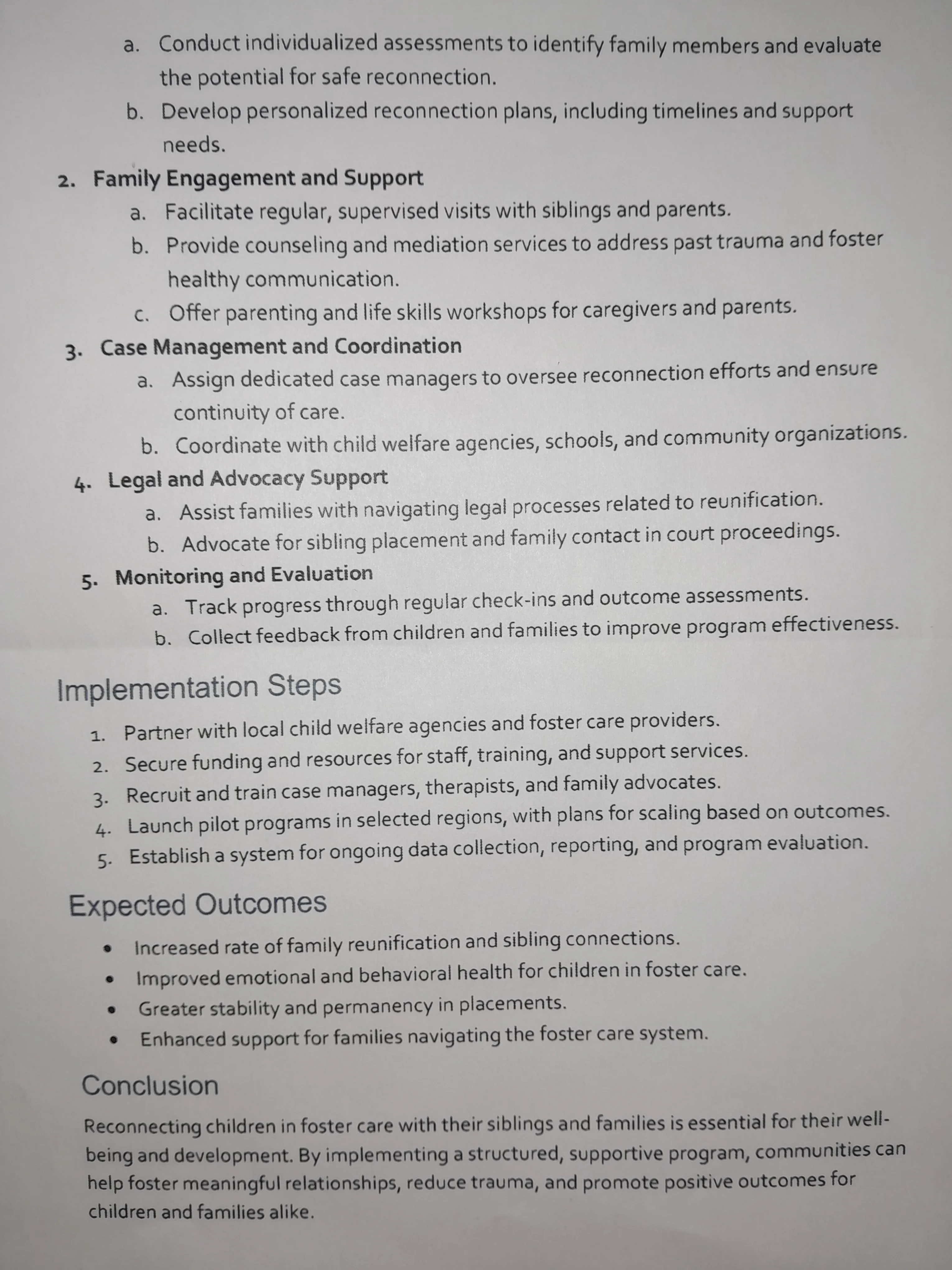
Figure 6.1: Programmatic milestone criteria tracking partner outreach, funding milestones, case manager onboarding, and data outcome evaluation.
7. Architectural Conclusion & Key Takeaways
The "Where's My Family" Proof of Concept validates a vital thesis in civic software engineering: Grassroots 501(c)(3) organizations do not need bloated enterprise development contracts or high-maintenance infrastructure to achieve enterprise-grade reliability.
By rigorously decomposing requirements:
- Public layer separation keeps front-facing content agile and mobile-responsive for broadcast drives.
- Third-party fiscal tokenization transfers compliance burdens to specialized providers (Donorbox/Stripe) while guaranteeing immediate IRS compliance.
- Event-driven integration pipelines eliminate data silos without custom backend maintenance.
- Air-gapped Zero-Trust vaults safeguard protected child welfare casework with military-grade defenses.
This PoC demonstrates that with disciplined systems architecture, philanthropic initiatives can achieve maximum mission impact while maintaining lean, transparent, and resilient digital operations.